
The Smart Export Guarantee pays you for surplus solar sent to the grid — but rates and rules vary by supplier.
What SEG replaced
SEG succeeded the Feed-in Tariff for new installations after March 2019. There is no single national rate — licensed electricity suppliers set tariffs, some fixed per kWh, some variable. You may hold SEG with a different supplier than your import tariff, though bundled products exist.
Registration requirements
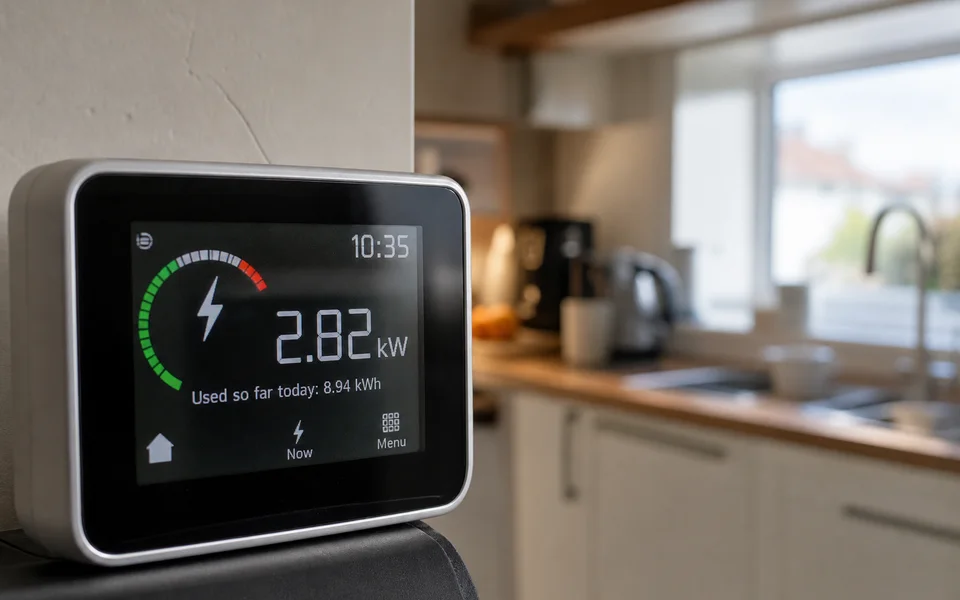
Your system must be MCS-certified, export must be metered (typically via smart meter), and you apply to a SEG licensee with your MCS certificate and export MPAN. Registration delays can cost summer export income — start paperwork at commissioning, not months later.
- Confirm your smart meter records export half-hourly.
- Keep MCS certificate and commissioning paperwork accessible.
- Note SEG contract start date and any minimum payment thresholds.
- Reconcile supplier statements against inverter export totals quarterly.
What to compare
| Factor | Why it matters |
|---|---|
| Tariff p/kWh | Direct export revenue |
| Contract length | Some tariffs fix for 12 months |
| Payment threshold | Small exporters may wait for minimum balances |
| Bundle discounts | Import + export combos may trade flexibility for simplicity |
When export income is worth optimising
Large roofs with low daytime occupancy export more. Batteries shift the calculus — less export, more self-use. Re-run the maths annually as retail prices move faster than many SEG tariffs.
Chasing the highest SEG rate matters less when you self-consume most of what you generate.
Switching SEG suppliers
You can change SEG licensee without moving import supplier in many cases. Give notice per contract terms and ensure export MPAN details transfer cleanly to avoid payment gaps.
Ofgem requires SEG licensees to offer tariffs, but not at any specific rate.
