
Most roof solar in England falls under permitted development — until it does not.
Permitted development basics
Panels on principal elevation roofs usually need to minimise visual impact, not protrude more than 200mm, and not exceed the highest part of the roof plane. Stand-alone arrays have separate limits. Wales, Scotland, and Northern Ireland have distinct permitted development schedules — verify locally.
Listed buildings and conservation areas
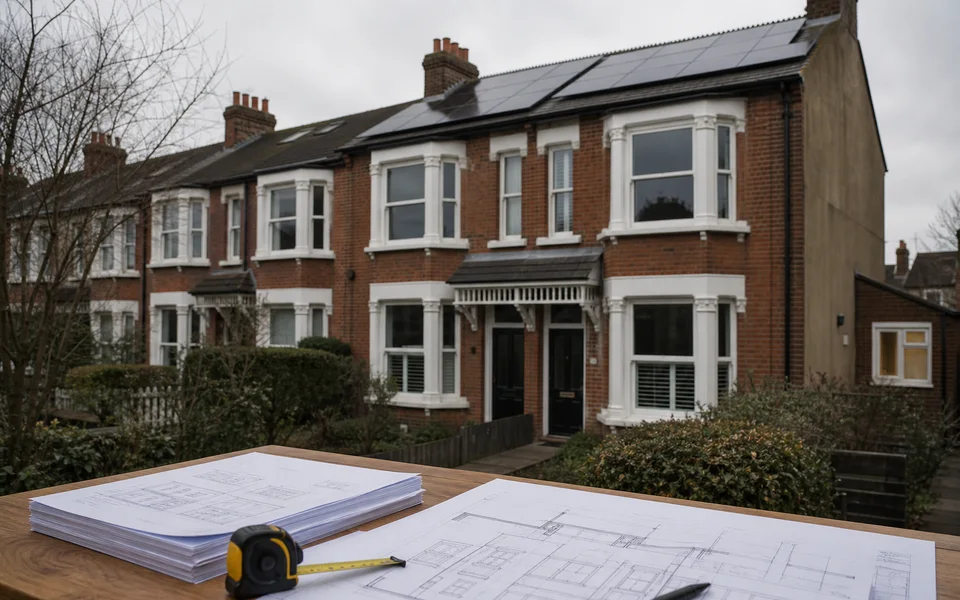
Listed building consent is separate from planning permission. Conservation area restrictions may limit front-roof panels or require panels to sit flush and unobtrusive. Early dialogue with the local planning authority saves costly removal orders.
Flats and leasehold
Freeholder consent is required regardless of permitted development rights. Roof ownership may be ambiguous in lease wording — communal roofs need managing agent approval. Obtain written consent before paying a deposit.
- Check title, lease, and freeholder policies.
- Confirm roof structural survey if installer requests it.
- Ask installer for permitted development letter for your scenario.
- Photograph panel placement for future conveyancing packs.
Building regulations and DNO
Electrical work must meet Part P; installers notify via competent person schemes. Distribution network operators require G98/G99 connection applications — your installer usually handles this, but delays happen on saturated rural feeders.
When neighbours complain
Permitted development does not guarantee neighbour goodwill. Reflective glare and visibility disputes are rare but possible. Panel colour and inset mounting reduce objections in sensitive streets.
Scotland, Wales, and Northern Ireland have distinct planning routes — verify with your local authority.
