
Power optimisers tackle partial shading on string inverters — useful on some UK roofs, oversell on others.
How optimisers differ from microinverters
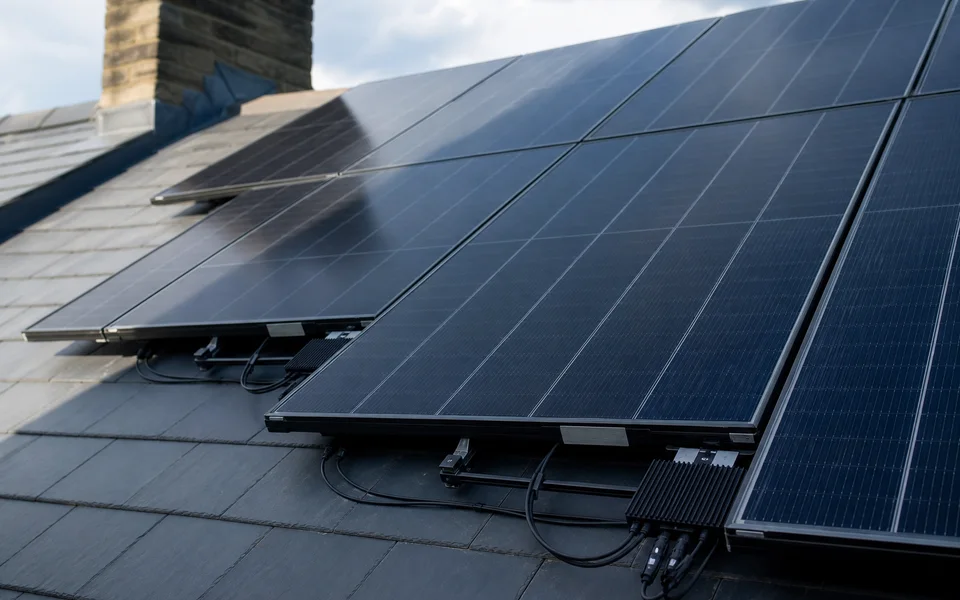
Optimisers attach per panel on a string inverter system, allowing modules to operate at individual maximum power points while DC still feeds a central inverter. Microinverters convert AC at each panel — different cost and failure profile.
When optimisers earn their cost
Mixed orientations on one string, chimney shading, or dormer shadows justify optimisers. Uniform unshaded south arrays rarely need them — save budget for monitoring or diverters instead.
| Roof scenario | Typical recommendation |
|---|---|
| Clean south string | Standard string inverter |
| E/W split one string | Optimisers or split strings |
| Chimney shade one corner | Optimisers on affected modules |
| Heavy morning shade | Microinverters or redesign layout |
Failure and replacement
Optimiser failure affects one panel's contribution — easier diagnosis than whole-string outages. Spares require electrician access on roof.
Cost per panel
Budget roughly £30–£60 per optimiser plus labour — multiply before accepting on entire array "just in case".
Shading software on the quote should name which panels need optimisation — not a blanket upsell.
Compatibility
Optimisers must match inverter brand ecosystems — mixing manufacturers voids warranties.
Request pre- and post-install yield estimates with and without optimisers to see modelled benefit.
