
Inverters fail more often than panels — warranty length and response times deserve scrutiny before you sign.
Typical warranty lengths
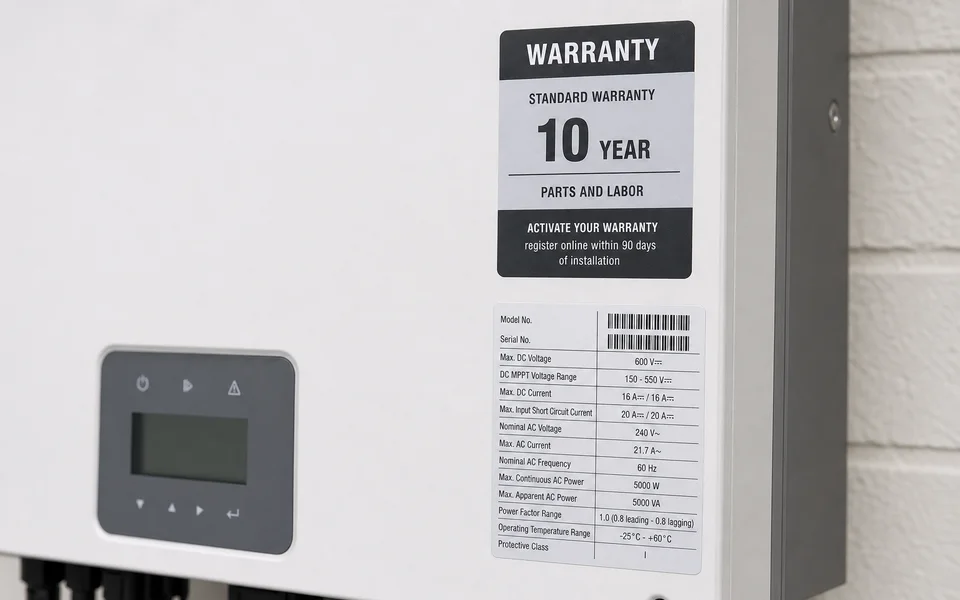
Panel product warranties often run 25 years linear output guarantees; inverter warranties commonly sit at 5–10 years standard, with paid extensions available. Hybrid inverter-battery units may have split terms — read each component.
Labour vs parts
Manufacturer warranties cover replacement units; labour to swap may fall on you after installer workmanship warranty expires — typically 1–2 years. Extended labour packages exist at install for a fee.
| Component | Common warranty |
|---|---|
| Monocrystalline panels | 25 years product / performance |
| String inverter | 5–10 years |
| Microinverters | 10–25 years depending on brand |
| Battery | 10 years or cycle cap |
Warranty registration
Some brands require online registration within 30 days — missed deadlines void coverage. Installer should confirm registration emails arrived in your inbox.
Making claims smoothly
Log fault codes from the app, photograph unit labels, and note outage dates. Grid outages are not inverter faults — document weather and DNO messages to avoid rejected claims.
A ten-year inverter warranty only helps if the manufacturer still trades in year nine.
Paid extensions — worth it?
Compare extension cost against expected replacement price in year eight — sometimes self-insuring wins. Finance deals may bundle extensions — check if optional.
Keep serial numbers and purchase invoices — warranties are tied to them.
