
Solar immersion diverters send surplus PV to your hot water cylinder — simple tech that can beat batteries on payback for the right homes.
How diverters work
A device monitors export and ramps immersion heater power to soak up spare kilowatts instead of sending them to the grid. Cylinder thermostats still cap temperature — diverters modulate rather than blindly boil.
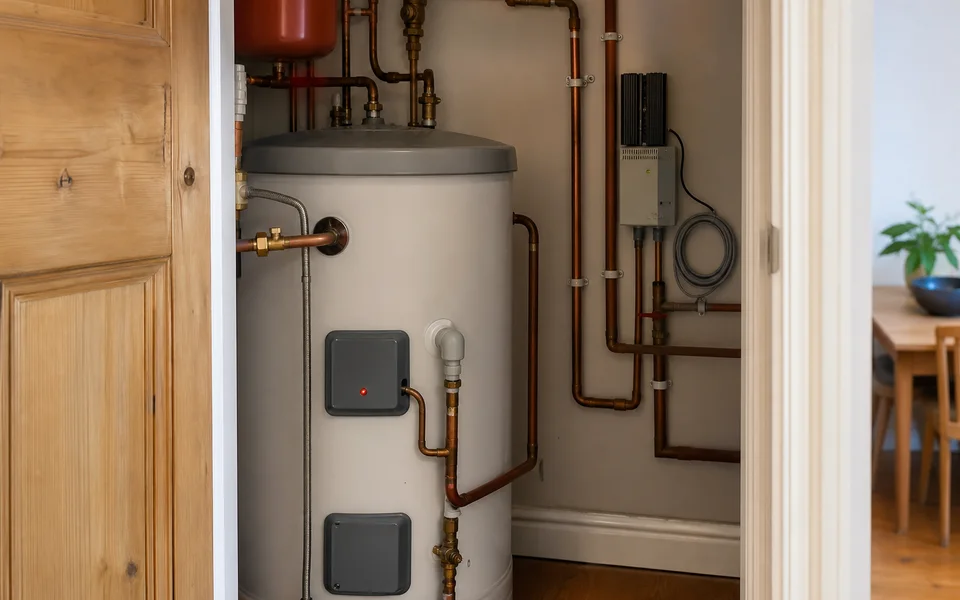
Cylinder compatibility
Dual immersion setups with dedicated solar immersion are ideal. Old single-element cylinders may need plumbing upgrades. Heat-pump-ready cylinders with coil priority may interact differently — confirm with installer.
- Confirm immersion rating matches likely surplus kW.
- Check cylinder insulation — unlagged tanks waste diverted heat.
- Ensure Legionella safety schedules still run on grid backup.
- Verify warranty on cylinder thermostats before wiring changes.
Diverter vs battery
Diverters cost hundreds, not thousands, and target one load efficiently. Batteries offer evening flexibility diverters cannot — choose based on whether hot water or general evening use is your bigger import.
Planning for heat pump later
If you may replace gas with a heat pump, hot water strategy shifts — diverters pair well with retained cylinders; combi-only homes need different solar use patterns.
Free hot water from surplus sun is satisfying — but only if someone showers before the evening import spike.
Installation notes
Wireless CT clamp installs are common; wired sensors add reliability. Placement near consumer unit simplifies access for future electricians.
Diverters do not replace gas safety checks or annual cylinder maintenance.
