
Panel cleaning is a cottage industry — on most UK pitched roofs, rain does more than annual jet-washing.
The efficiency myth
Manufacturers quote losses from heavy soiling — but typical UK rainfall washes dust and pollen on angled surfaces. Studies on domestic roofs often show single-digit percentage gains from cleaning, not the 20–30% door-knockers cite.
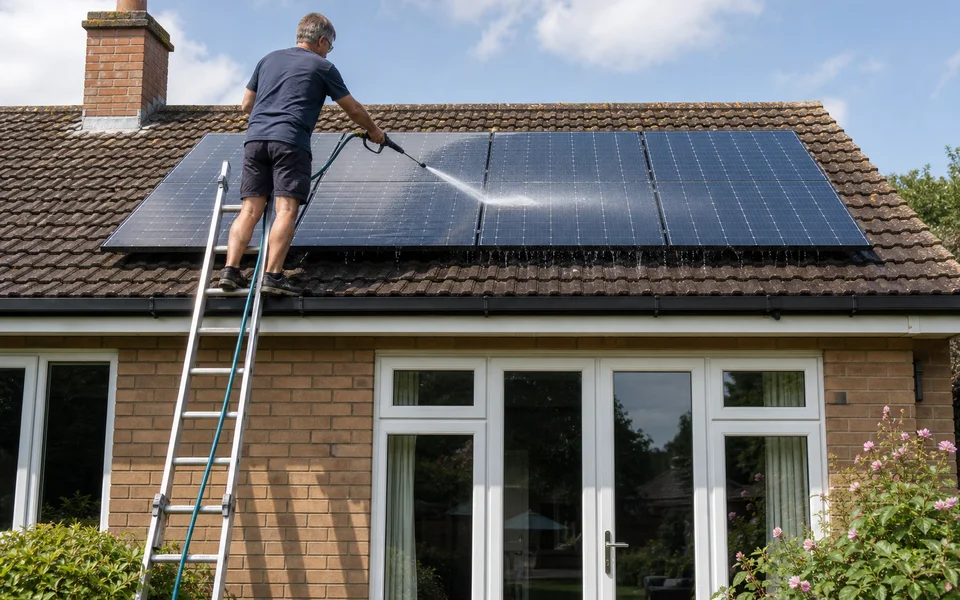
When cleaning helps
Flat roofs, agricultural dust, coastal salt spray, and persistent bird mess are exceptions. Pollen-heavy rural lanes and under-tree sap may warrant gentle cleaning in spring.
- Inspect from ground with binoculars before paying for access.
- Never jet-wash on roof without fall protection and insurer awareness.
- Use soft brush and deionised water — harsh chemicals risk warranty issues.
- Document who accessed the roof for insurance purposes.
Maintenance beats polishing
Check mounting integrity, cable wear, and inverter fault logs annually. Loose clips and pigeon mesh failures matter more than dust on most suburban roofs.
Recognising sales pitches
Cold callers promising huge boosts post-cleaning rarely provide before/after generation data from your inverter. Ask for kWh evidence, not shine photos.
If your panels look fine from the garden, your money may work harder on tariff switching than on ladder hire.
Warranty considerations
Some panel warranties exclude damage from improper cleaning — follow manufacturer guidance.
Flat commercial arrays are cleaned more often than domestic pitches — do not extrapolate from warehouse case studies.
