
Inverters convert DC from panels to AC for your home — and they hate sustained summer heat in the wrong cupboard.
Why heat cuts output
Inverters derate when internal temperatures rise, reducing AC output exactly when panels produce most. Loft installations under dark tiles can exceed comfortable operating ranges on July afternoons.
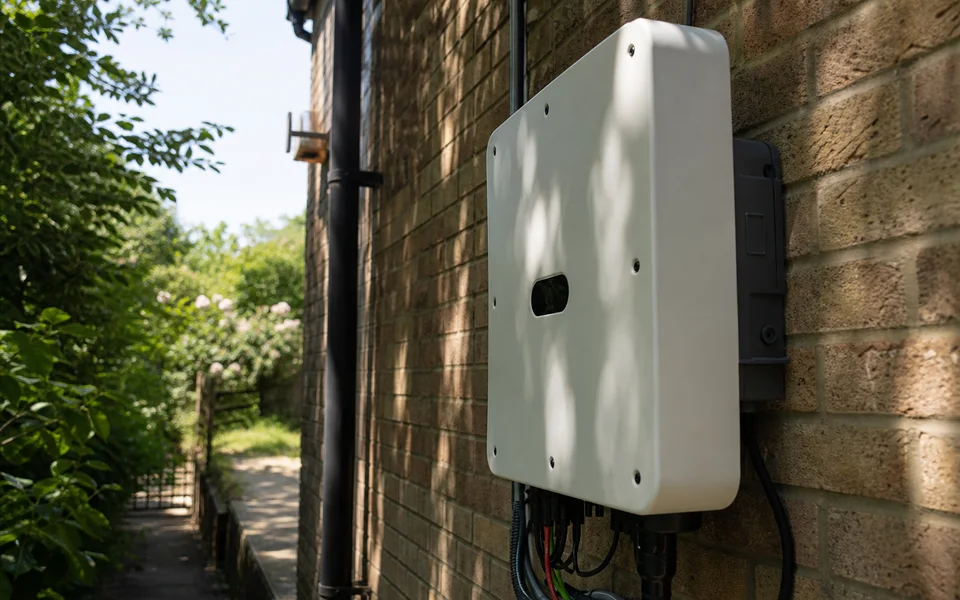
Placement options in UK homes
Garage walls, shaded exterior walls, and ventilated utility rooms often outperform hot lofts. External weather-rated units need clearance for airflow — installers should follow manufacturer gap specs.
- Reject enclosed unventilated cupboards without fan assistance.
- Ensure cable runs meet regulations — long DC runs have losses.
- Check noise ratings if mounting near bedrooms.
- Confirm warranty requires authorised placement — not DIY relocation.
Summer monitoring
Inverter apps show temperature warnings on some models. Recurring derating may justify relocation at warranty expense if install breached guidelines.
Hybrid inverters and batteries
Battery-inverter combos add heat load. Stacking battery and inverter in the same small space compounds risk — spread units per manufacturer guidance.
The coolest inverter location is often the one you walk past weekly — not the one hidden where faults go unnoticed.
Maintenance access
Leave working space for future swaps — inverters typically last 10–15 years, shorter than panels. Cramped lofts slow repairs and add labour cost.
Manufacturer datasheets list operating temperature ranges — worth five minutes before sign-off.
