
Home batteries are marketed as payback accelerators — for many UK homes the maths is more nuanced.
What batteries actually do
They store midday solar for evening use, reducing import at peak retail rates. They do not create extra sun, and they add round-trip efficiency losses — typically you store 90p of every £1 of solar energy put in.
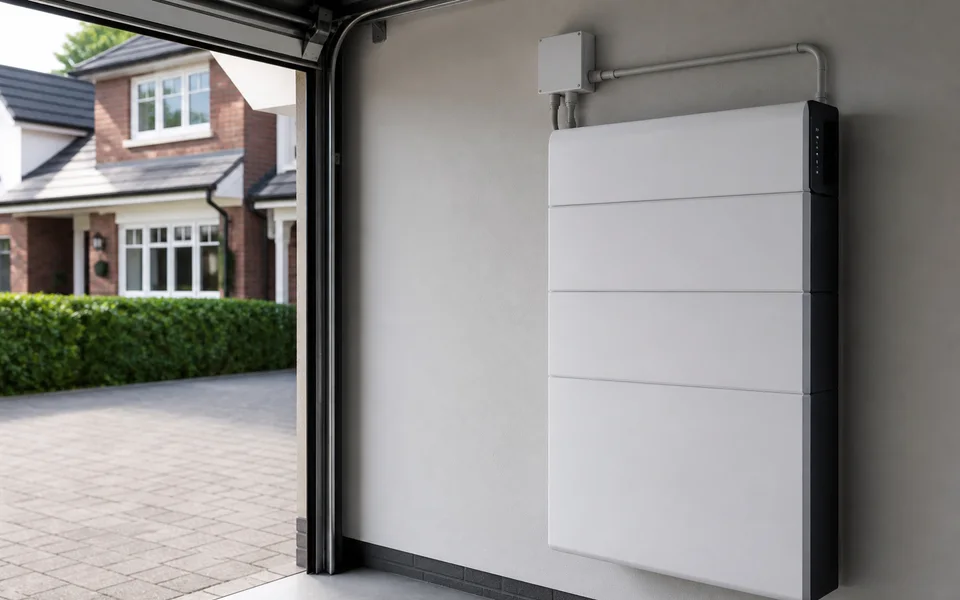
Honest payback framing
Battery payback often runs 12–18 years when valued only against bill savings — longer than panels alone. Value improves with high peak/off-peak spreads, high self-generated surplus, and EV charging from stored solar.
| Household profile | Battery case |
|---|---|
| Out all day, low export rate | Weaker — little to store |
| Home all day, high export | Weaker — already self-consuming |
| EV + time-of-use tariff | Stronger if dispatch is automated |
| High evening peak rates | Moderate — maths depends on spread |
Sizing without overspec
Oversized batteries cost more without usable capacity — daily cycle depth matters. Match storage to typical evening import minus any baseload you cannot shift.
A battery is a tariff appliance as much as a solar accessory — weak spreads, weak case.
Cheaper alternatives first
Hot water diverters, timed appliances, and tariff switching often deliver faster returns than £4,000–£6,000 batteries. Try behaviour and tariff changes for a year before adding storage.
Future-proofing
Some inverters accept retrofitted batteries later — ask about expansion if you want optionality without paying today.
Warranty cycles and throughput limits affect long-term value — read the battery warranty sheet.
