
Chimney stacks and neighbour trees are among the most common shading sources on UK terraces — and among the most disputed at survey stage.
How chimneys shade strings
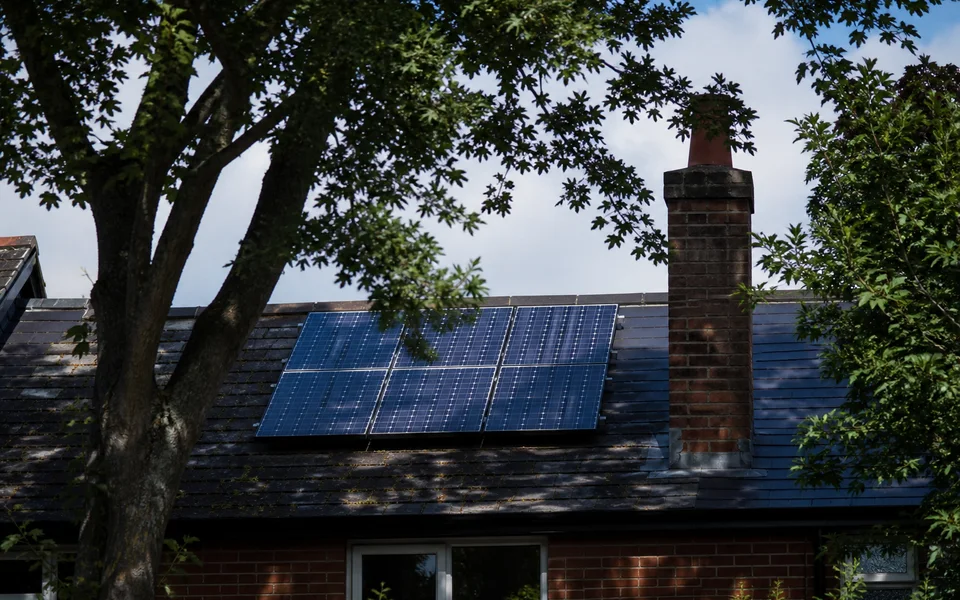
On typical Victorian terraces, a central or gable chimney casts a shadow that sweeps across south-facing planes from late morning through afternoon. One shaded cell on a string inverter can disproportionately cut output unless modules are optimised individually.
Neighbour trees and rights
Deciduous trees block more in summer when solar output peaks. Evergreens create year-round loss. You generally cannot force a neighbour to prune for your panels — plan array layout around existing canopy and future growth.
| Shading source | Typical fix |
|---|---|
| Chimney on same roof | Panel layout split, optimisers, or microinverters |
| Neighbour tree | Layout avoidance, optimisers, realistic yield downgrade |
| Adjacent dormer | Morning or afternoon string separation |
Survey tools worth asking about
Competent surveys use horizon analysers or drone imagery — not just eyeballing from the ladder. Insist on a shading percentage in the written quote.
Legal and neighbour relations
High hedges disputes follow separate council routes from solar planning. Document pre-installation photos if you later negotiate trimming. Do not assume verbal assurances to cut trees bind future owners.
Design around the tree that exists in ten years, not the sapling your neighbour planted last spring.
Technology fixes and costs
Power optimisers and microinverters add cost per panel but recover yield on partially shaded roofs. On clear south roofs they may be unnecessary — pay for them where shade is proven.
Tree preservation orders may restrict pruning — check before promising yield recoveries.
