
South-facing should mean maximum sun — yet many UK roofs still underperform. Orientation is only the starting point.
Pitch and tilt matter
Ideal pitch in the UK is often quoted as 30–40°. Shallow pitches on modern extensions may look south-facing but receive more reflected and diffuse light than direct beam — output sits below MCS tables for standard pitches.
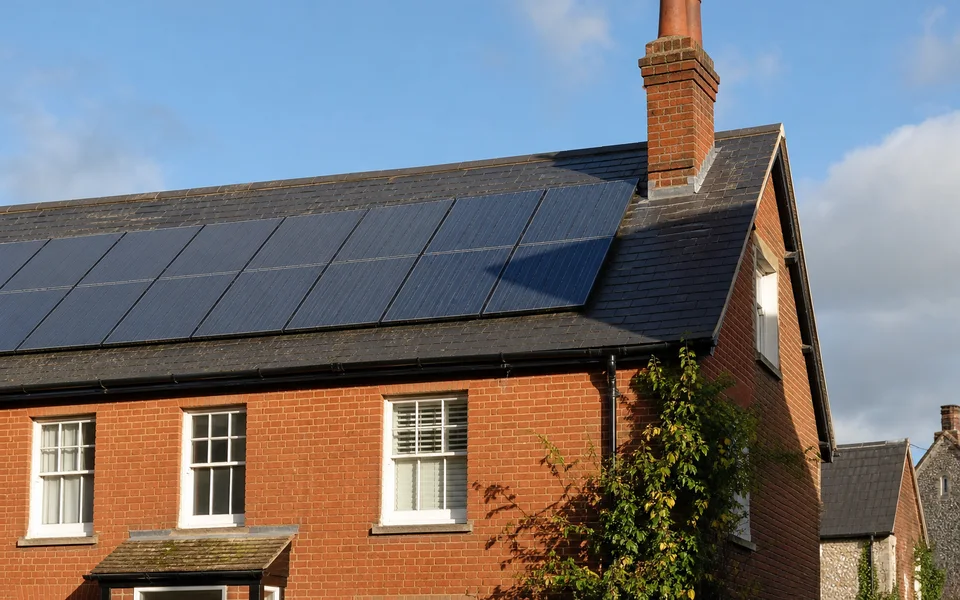
Micro-shading you overlook
TV aerials, satellite dishes, roof windows, and slim chimney stacks cast narrow shadows that move across strings during the day. On string inverters without optimisers, the worst-shaded panel can drag down the whole array.
- Walk the roof at mid-morning, noon, and mid-afternoon — note moving shadows.
- Ask for shading analysis in the MCS proposal, not just orientation compass.
- Compare string vs optimiser layouts if partial shade is unavoidable.
Soiling and bird activity
Urban pollution and pollen films reduce output gradually — rarely dramatic on pitched roofs where rain cleans, but noticeable on shallow pitches near busy roads. Pigeon habitation under panels creates local hot spots and mess.
Inverter clipping
Installers sometimes size inverters below peak panel wattage to save cost. On perfect south roofs this causes clipping on rare summer afternoons — acceptable trade-off if documented. On marginal roofs, clipping plus other losses hurts more.
A compass reading of south is not a performance guarantee — pitch, shade, and equipment matching complete the picture.
What to do in year one
Compare monthly generation to the MCS estimate. Persistent shortfall on an unobstructed south roof may indicate wiring faults, inverter issues, or shading not modelled at survey.
Shading analysis tools use local horizon data — ask your installer which software they used.
